The work of community building does not stop in the summertime
For those who do not follow provincial politics closely, the Ontario Liberal Party is currently choosing a new leader — and, we hope, Ontario’s next Premier.
 Five candidates are seeking the leadership, including two current members of the Ontario Liberal caucus and a former federal cabinet minister. One of them will soon become Leader of the Ontario Liberal Party and make the case to Ontarians that they should be the next Premier of Ontario.
Leadership races are important moments for political parties. They are a chance to debate ideas, set priorities and listen to the people’s priorities.
That is why I am pleased that, on Tuesday, August 25, from 6 to 8 p.m., we are bringing the Ontario Liberal leadership race directly to Orléans and East Ottawa.
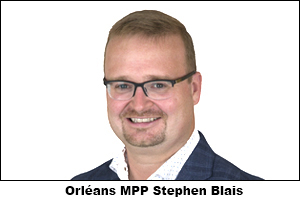
Together with John Fraser, MPP for Ottawa South, and Lucille Collard, MPP for Ottawa–Vanier, I am hosting an East Ottawa Leadership Meet & Greet at MIFO’s temporary location at Place d’Orléans.
The goal is simple: give residents an opportunity to meet the people who want to lead the Ontario Liberal Party, hear directly from them and ask questions about the issues that matter to our communities.
Political leadership contests can sometimes feel distant from everyday life. Most people are focused on work, family, paying the bills, getting around the city and trying to find a family doctor. That’s life these days.
But the choice of leader matters. We are choosing the person who will shape our party’s priorities and present a vision for a change in governing Ontario.
Orléans is one of the fastest-growing parts of our city. Our communities are facing major issues including health care access, affordability, transportation, schools, housing and the infrastructure needed to keep pace with growth. Residents deserve to hear what leadership candidates would do about them.
The evening will include time to mix and mingle with the candidates, hear each of them address the audience and put questions to them from local residents.
Whether you’re a longtime Liberal, were a member in the past and have let your membership lapse or are thinking about getting involved for the first time, you are welcome to join us.
The East Ottawa Leadership Meet & Greet takes place Tuesday, August 25, from 6 to 8 p.m. at MIFO’s temporary location at Place d’Orléans.
Attendance is free, but space is limited. Please RSVP in advance at stephenblais.com.
I hope to see you there.









 CUMBERLAND FARMERS’ MARKET from 9 a.m. to 1 p.m. at the R.J. Kennedy Arena in Cumberland Village with a variety of local farmers and vendors ready to showcase their freshest produce, handmade goods, and unique finds! FREE ADMISSION
 SDBC TAPROOM SERIES presents Two Crows for Comfort with special guest Dan Kelly live and in concert from 7 p.m. Tickets $10 available at
  TRIVIA NIGHT from 7:30 p.m. every Monday night at the Royal Oak Pub Orléans. Free to play. Prizes for the winning team! The Royal Oak Pub is located at 1981 St. Joseph Blvd. near Jeanne d’Arc. For more info visit
  TRIVIA NIGHT from 6:30 p.m. at the Stray Dog Brewing Company. Exercise your grey matter before it turns to mush over the holidays. Reservations are a must to secure your spot. Send your team name and number of people to info@straydogbrewing.ca. The Stray Dog Brewing Company is located at 501 Lacolle Way in the Taylor Creek Business Park.
 ORLÉANS FARMERS’ MARKET from 11 a.m. to 4 p.m. in the parking lot of the Ray Friel Recreation Complex on Tenth Line Road. Browse 130+ local vendors, grab a bite, and discover amazing handmade and local finds. Plenty of parking available.