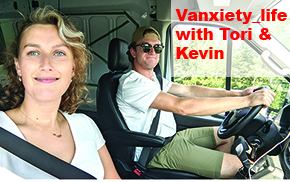
Deaf-blind athlete and disability advocate Kevin Frost is warning people to be on the look out for possible “fake” service dogs.
Frost recently attended an event at the Shenkman Arts Centre where he not only witnessed someone using a fake guide dog, but was subjected to bias on the part of one the Arts Centre’s volunteer attendants.
Frost had taken his seat in the Harold Shenkman Hall with his guide dog Woody at his side when one of the volunteer ushers started asking people around him if they were okay with his dog being there.
“Asking other people is they are ‘okay’ with a service dog is unnecessary, uncomfortable, embarrassing and should never happen,” says Frost, who has brought the incident to the attention of the Shenkman Arts Centre’s management.
“Several of the people (the usher) approached expressed shock and confusion that he was even asking the question,” says Frost.
“In over 20 years of being a guide dog owner I have never experienced this situa-tion before.”
After everyone around him said they had no issue with Woody being there, Frost proceeded to enjoy the show. Although he is technically deaf and blind, he still has three per cent tunnel vision and nine per cent of his hearing.
When the show ended, the situation went from bad to worse. As Frost was leaving the hall another service animal started barking and acting aggressively towards Woody, something a properly trained and certified service dog would never do.
The owner did nothing to curb the dog’s behaviour, which appalled Frost even more.
This type of interaction would never hap-pen if both the individual in question and their “service” dog were truly legitimate, says Frost.
“The staff also did nothing to help quell the situation and we were forced to wait for the other animal to leave.”
Although Frost has since received an apology from the Shenkman Arts Centre’s management, he is trying to convince them.
In the meantime, Frost is asking the Shenkman Arts Centre and the City of Ottawa to request members of the public who have a service dog to produce an ID to prove the authenticity of the animal and to post that requirement on their websites.
“I carry a certified ID proving my service dog is from a registered Guide dog school,” says Frost. “l have found that a courteous request for identification is the most effective method to confirm a dog’s legitimacy, and their training. Refusal to provide that could be evidence that the animal is not a certified service guide dog.”.








 CUMBERLAND FARMERS’ MARKET from 9 a.m. to 1 p.m. at the R.J. Kennedy Arena in Cumberland Village with a variety of local farmers and vendors ready to showcase their freshest produce, handmade goods, and unique finds! FREE ADMISSION
 SDBC TAPROOM SERIES presents Two Crows for Comfort with special guest Dan Kelly live and in concert from 7 p.m. Tickets $10 available at
  TRIVIA NIGHT from 7:30 p.m. every Monday night at the Royal Oak Pub Orléans. Free to play. Prizes for the winning team! The Royal Oak Pub is located at 1981 St. Joseph Blvd. near Jeanne d’Arc. For more info visit
  TRIVIA NIGHT from 6:30 p.m. at the Stray Dog Brewing Company. Exercise your grey matter before it turns to mush over the holidays. Reservations are a must to secure your spot. Send your team name and number of people to info@straydogbrewing.ca. The Stray Dog Brewing Company is located at 501 Lacolle Way in the Taylor Creek Business Park.
 ORLÉANS FARMERS’ MARKET from 11 a.m. to 4 p.m. in the parking lot of the Ray Friel Recreation Complex on Tenth Line Road. Browse 130+ local vendors, grab a bite, and discover amazing handmade and local finds. Plenty of parking available.